
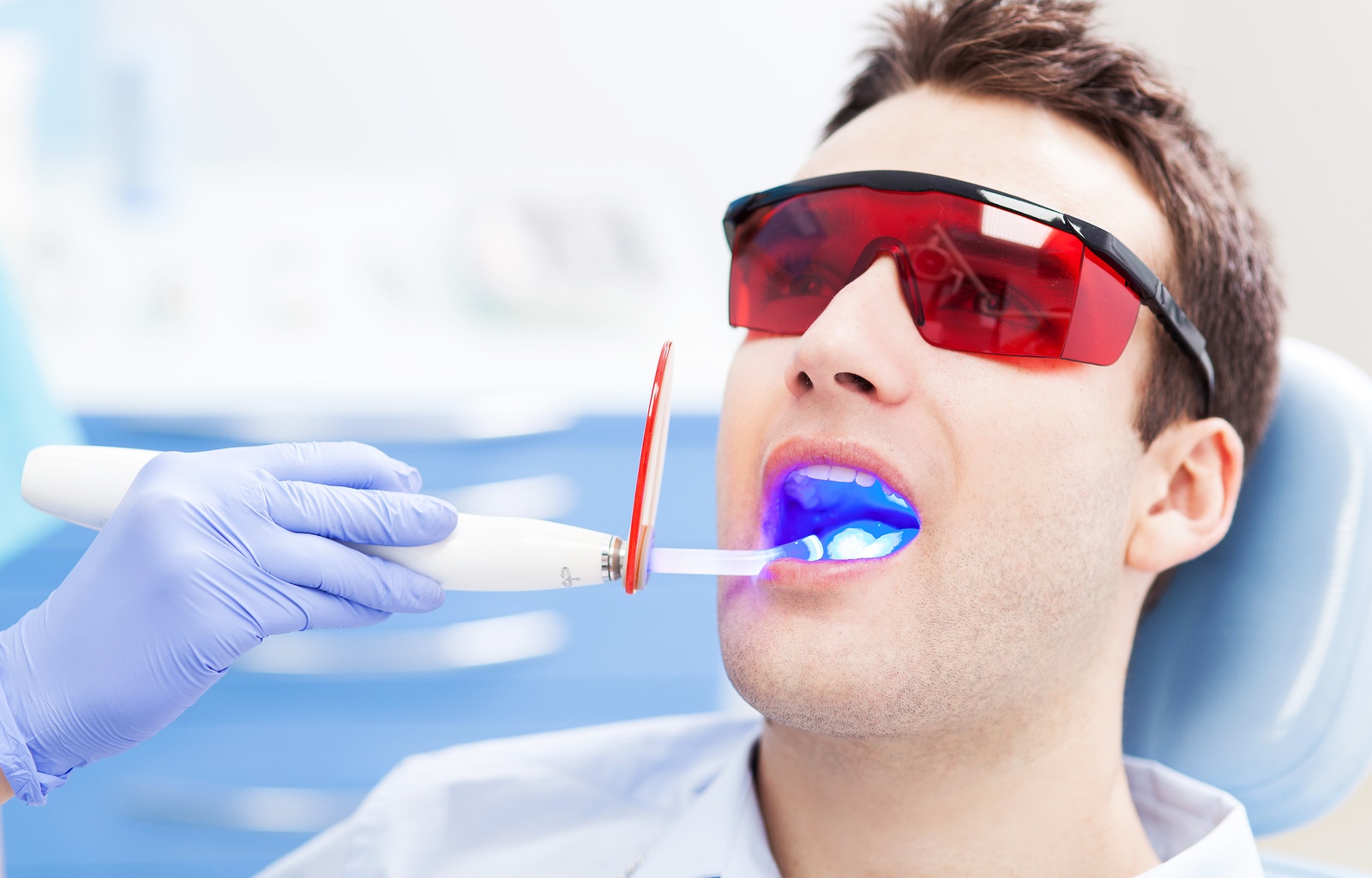
All lasers work by delivering energy in the form of light. When used for surgical and dental procedures, the laser acts as a cutting instrument or a vaporizer of tissue that it comes in contact with. When used in teeth-whitening procedures, the laser acts as a heat source and enhances the effect of tooth-bleaching agents.
lasers to treat:
- Tooth decay.
- Gum disease.
- Biopsy or lesion removal.
- Biopsies.
- Teeth whitening.
Lasers can't be used in many commonly performed dental procedures. For example, lasers can't be used to fill cavities located between teeth, around old fillings, and large cavities that need to be prepared for a crown. In addition, lasers cannot be used to remove defective crowns or silver fillings, or prepare teeth for bridges.
What is the advantage of using dental lasers?
Compared to the traditional dental drill, lasers:- May cause less pain in some instances, so reduces the need for anesthesia
- May reduce anxiety in patients uncomfortable with the use of the dental drill
- Minimize bleeding and swelling during soft tissue treatments
- May preserve more healthy tooth during cavity removal