
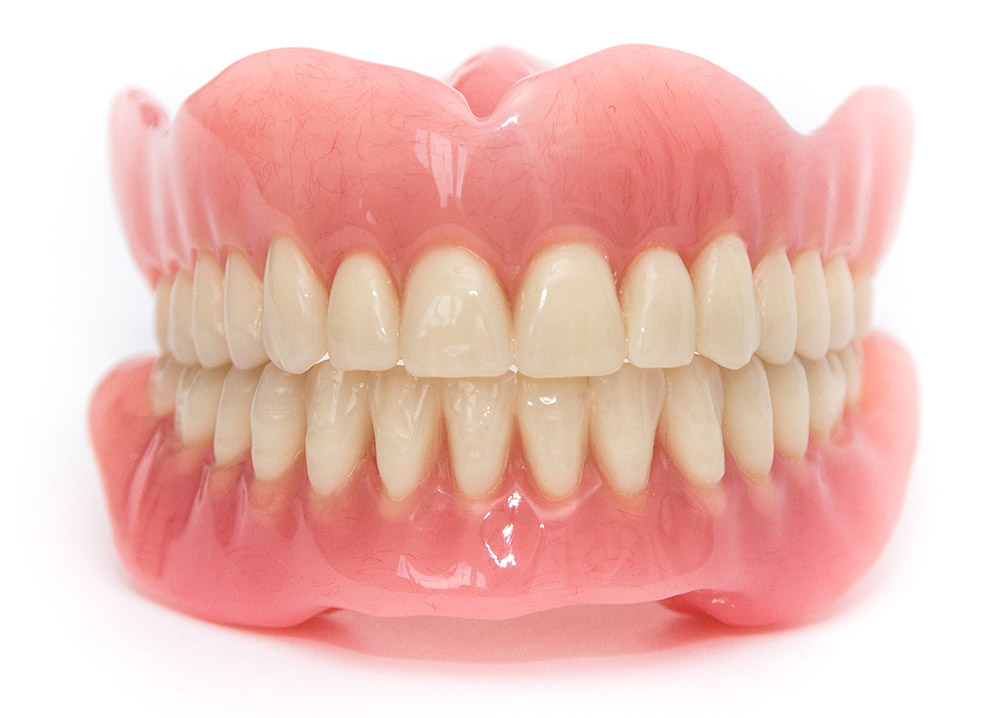
Dentures are prosthetic devices constructed to replace missing teeth, and are supported by the surrounding soft and hard tissues of the oral cavity. Conventional dentures are removable. However, there are many denture designs, some which rely on bonding or clasping onto teeth or dental implants.
There are Two types Dentures like:
Complete Dentures:Complete dentures can be either "conventional" or "immediate." Made after the teeth have been removed and the gum tissue has begun to heal, a conventional denture is ready for placement in the mouth about eight to 12 weeks after the teeth have been removed.
Partial Dentures:A removable partial denture or bridge usually consists of replacement teeth attached to a pink or gum-colored plastic base, which is sometimes connected by metal framework that holds the denture in place in the mouth. Partial dentures are used when one or more natural teeth remain in the upper or lower jaw. A fixed bridge replaces one or more teeth by placing crowns on the teeth on either side of the space and attaching artificial teeth to them.
Discomfort
Avoid pain by starting with easy but nutritious food to eat. Examples of a softer diet can include fish, eggs, cottage cheese, cooked potatoes, oranges and apple sauce. If you have discomfort, remove the denture and massage the painful area with your finger. Let the gums rest and then be visible and precise adjustments will be very difficult.
Chewing
Our team at Chellammal Dental will advise you to try to chew with both sides of your mouth. If food is evenly chewed on both sides, the denture will be less likely to tip. Try not to bite with the front teeth as this will cause the back end of the denture to move off the gums. Biting with the side teeth will give better stability.
Swallowing
Pain during swallowing may simply require a minor denture base adjustment.
Speech
Speech is a very complicated and dynamic process involving all parts of the airway and mouth. Your denture has been constructed to meet the demands of stability and retention during speech. Fortunately, people are very adaptable and speech sounds very good at the time of delivery. If speech does not sound right to you, give it some time and normal body adaptation will resolve your concerns. Practice reading aloud. Do not focus undue attention on the process.
Cleaning
To remove food debris and bacterial plaque from your prosthesis, brush vigorously with a stiff denture brush. Use either soap and water or a commercially available denture cleaning agent. Do not use toothpaste to clean your denture. The effervescent soaking solutions are also useful. Follow the manufacturer’s instructions. Wash your denture over a basin of water or a cloth. If they are dropped on a hard surface, the acrylic portion may fracture and any metal may bend. Make sure to clean your implant attachments in your mouth as well. You should also use a soft toothbrush to gently massage and clean your gums and tongue.